
Searching the Clay County Court Docket
Skip any county-built site. Clay County runs on North Carolina's unified courts system, so the real starting point is the North Carolina eCourts Portal. Its Smart Search opens the public Case Summary. This is also called the Register of Actions. It covers Clay Superior Court, District Court, estates, nonconfidential special proceedings, and traffic cases. Anyone can use the Portal for free, with no registration. An account only lets you save cases in My Cases. It does not unlock restricted records or make the portal a source of official copies.
Have the full record number ready if you can. Searching by name works, but several people may share it, and an empty result tells you little on its own. Set the Location filter to Clay, and add a case type only after the name or record number is in. For a court-file question, a changed setting, or an official copy, the Clay County Clerk of Superior Court is the local fallback.
- Open Portal and choose Smart Search.
- Enter the complete case number or a public name in the displayed Last, First format.
- Use the Clay location filter and a fitting case-type filter if the statewide result list needs narrowing.
- Open the underlined case number and read the Case Events, Hearings, Dispositions, and Financial Information sections that appear.
- Use Search Hearings for a current setting, then contact the Clerk for a public terminal, paper-file inspection, or certified record when needed.
Clay County Portal Case Summaries
The state's own Portal training resources explain Smart Search as a window into Enterprise Justice. That is the case-management system North Carolina runs statewide. So a Clay County court docket result you pull up is a public online summary of the court file. It is not some separate database kept by a city office. Click the result and the Case Summary menu opens. Its sections show up only when that kind of information exists. So a file with no Financial Information or Hearings listed is not automatically missing a document.
Where the portal earns its keep is in splitting the timeline from the paperwork. Case Events give you the chronological public register. Public documents may appear one by one, while sealed, confidential, or restricted ones stay out. The Portal says plainly that it is not the official court record. That line matters when you need a clerk-certified document rather than an online case view. The statewide eCourts overview tracks the Enterprise Justice rollout that now includes Clay. It gives searchers one main public route across court levels.
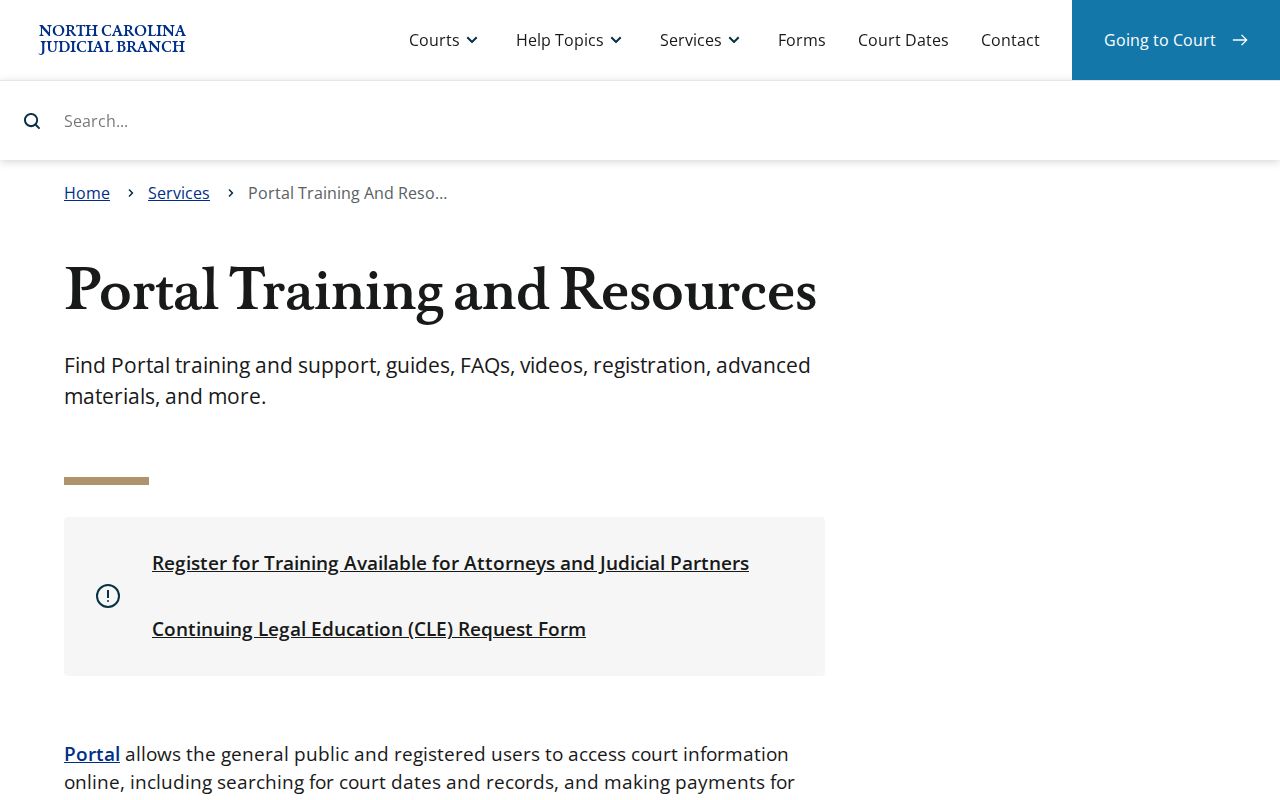
The Portal training resource walks through the public search system Clay County court docket users rely on.
Inside a Clay County Court Docket
North Carolina labels the online record a Case Summary or Register of Actions. The chronological items inside it are docket entries, also called Case Events. A Clay County court docket opens with case and assignment details. From there it lists public party information and the event timeline. Civil, family, and probate or mental-health summaries may include causes of action where they apply. Victim information never appears in a public name search. Public dates of birth are masked.
Judge the case by its latest activity. Read the most recent Case Event together with the most recent Hearing and Disposition. Do not treat one older entry as the whole story. A judgment index is only a reference snapshot. When a case summary exists, Smart Search offers the fuller public context.
| Record number | A four-part Enterprise Justice identifier; Clay numbers end with county identifier -210. |
|---|---|
| Case Events | The dated public register of filings, process activity, hearings, orders, and dispositions where entered. |
| Parties and claims | Public party roles and, for applicable civil categories, causes of action. |
| Hearings | Case-specific setting information when populated; Search Hearings is the separate current-calendar tool. |
| Dispositions and financials | Outcome and financial sections when information exists, not a promise that every case shows either section. |
Clay County Docket Numbers End -210
A Clay County court docket number follows the Enterprise Justice format. It runs two-digit filing year, case-type letters, and a six-digit sequence. A hyphen follows, then the three-digit county identifier. Clay's identifier is 210. An illustrative criminal pattern is YYCR######-210. The real letters and sequence must come from the citation, summons, notice, or clerk. A Portal result also carries them. A matching suffix alone does not prove a current case exists.
Legacy type letters still help when you read a converted record. CVD means Civil General. CVM means Civil Magistrate. CVS means Civil Superior. CR and IF appear in the official guidance as criminal and infraction examples. Always use the complete number. Never build one from an abbreviation. For a name search, Portal allows wildcards only under its stated character rules. If the results come back too broad, narrow them. Use Location, status, case type, date, or permitted date-of-birth filters.
Note: a case-number search is more specific than a name search. But a restricted or wrongly formatted number still may not produce a public result.
Courts That Keep Dockets in Clay County
One Clay County Clerk of Superior Court office holds the county's Superior and District Court records. Both court levels file there. You still need to identify the court level. Clay Superior Court District 43A handles felonies. It also takes major civil cases involving $25,000 or more, plus appeals from District Court. Clay District Court District 43 takes misdemeanors, infractions and traffic. Family and juvenile matters sit there too, along with civil cases within its jurisdiction. Magistrates serve as District Court officers, not as a separate county docket office.
The Judicial Branch court-types explanation confirms where the money lines fall. Small claims generally sit with magistrates at or below $10,000. District Court civil jurisdiction generally spans $10,000 to $25,000. When a statutory exception applies, the case designation in the Case Summary controls.
| Court | Docket covers | Where to search |
|---|---|---|
| Superior Court District 43A | Felonies, major civil cases, and District Court appeals | Portal Case Summary, then Clay Clerk for official file access |
| District Court District 43 | Misdemeanors, traffic or infractions, family matters, and district civil cases | Portal Case Summary and Search Hearings, with the same Clay Clerk |
| Clay magistrate matters | Small claims, initial criminal process, release conditions, and eligible minor matters | Clay Clerk or public terminal; no separate magistrate portal was documented |
The North Carolina court hierarchy places Clay's trial dockets below the Court of Appeals and Supreme Court. Court structure: every Clay docket starts at the trial level.
Every Clay County docket search therefore begins in the trial courts: Superior or District Court, whichever level fits the case.
Clay County Court Docket Levels
Jurisdiction trips people up most in a Clay County court docket search, not rival record offices. Felony charges belong on the Superior Court path. Misdemeanors and traffic citations begin in District Court. Civil searchers should not assume every lawsuit is a Superior Court matter. Estates stay in the Clerk and Portal system. So do open special proceedings, since Clay runs no separate probate court.
An appeal or transfer can look like a vanished docket. It is not. Portal status labels include Appealed, Transfer to Another County, Transferred to Superior Court, Stayed, and Reopened. Begin with the original Clay Case Summary. Read the public disposition and transfer events there. Ask the Clerk where the official record was transmitted. North Carolina Court of Appeals review is a different layer from the Clay trial-court case file.
For structure instead of one case, the unified-court-system overview shows why the same local clerk serves as the public access point for both trial divisions.
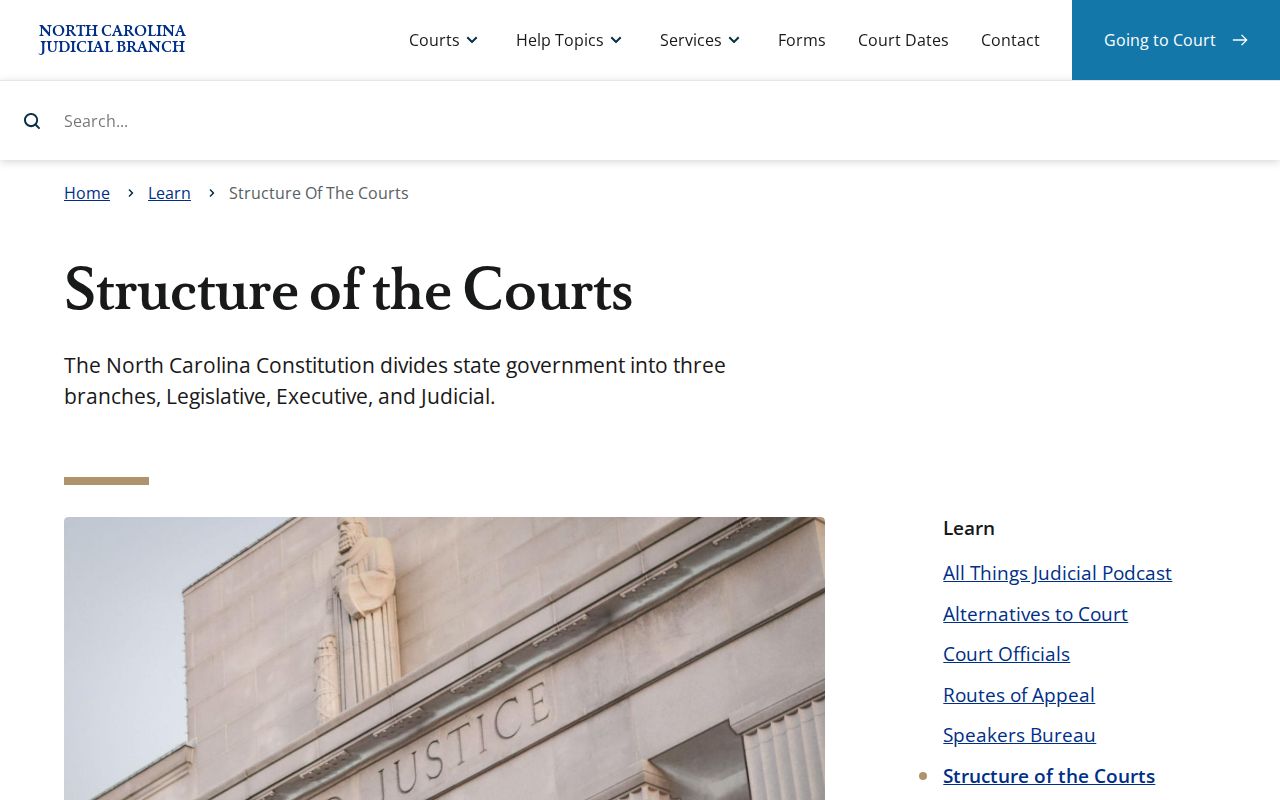
Clay County cases share one clerk and one Portal route. The statewide structure still keeps court-level jurisdiction separate, so the division a case starts in continues to matter.
How to Find Court Dates and Settings
Two tools cover a Clay County setting. Portal Search Hearings is the live calendar. Pick the Clay location and a hearing type. Then choose a permitted search method and a date range. It tracks hearings by case number, party, business, attorney, judicial officer, or courtroom. Pair it with the individual Case Summary. That ties a hearing to the full case history. The official record confirms where and when a hearing sits. A calendar row may not carry every courtroom detail, though.
The Clay local administrative schedules add Civil Calendars, Criminal Calendars, and seasonal District Court session PDFs. Read those for session context only. A reset, continuance, or conflict still needs a check against Search Hearings, and then a call to the Clerk or the courtroom.
The full calendar workflow sits on the Clay County Court Dates page.
Clay County Court Docket Hearings
District 43 court calendars in Clay County lean on shorthand that only means something in context. The Spring 2026 legend spells it out. T stands for traffic, and MTV means minor traffic violations. DR is domestic relations. DSS covers Department of Social Services or juvenile matters. JUV/CS covers juvenile or criminal and child support, NJ means non-jury, O is other criminal, and RC is recovery court. These tags mark what kind of session is scheduled. They do not create a separate docket or promise any outcome for a single case file.
The criminal local rules for District 43 open courtroom access at 8:45 a.m., ahead of a 9:30 a.m. start. There is no District Court calendar call. None of that overrides the appearance time printed on your notice. Check the current setting directly. An old Case Event, a guessed call order, or a schedule abbreviation is not a reliable substitute for the docket entry that governs your court date.
Note: Portal does not flag every hearing as virtual or in person. Take any remote-event question to the Clerk or the courtroom channel.
Clay County Court Docket No Results
A no-result Clay County court docket search deserves a careful second pass. Recheck the spelling. Check the Last, First name format and every character of the record number. A current case can be restricted from public Portal viewing. A fresh filing may simply need the Clerk's help. A -210 ending is a Clay clue. But it means nothing without the full year, type, and sequence.
Apply the Clay Location filter before widening a statewide name search. Still nothing? Call the Clay County Clerk of Superior Court. Ask about public terminal access and the paper-file procedure, and describe the case as precisely as you can. Never read a no-result as proof of a sealed, expunged, dismissed, or nonexistent case. Those are different conditions with different records consequences.
Public Access to Court Dockets
Public access to a Clay County court docket starts online but does not stop there. G.S. 7A-109 requires clerks to keep prescribed records, files, dockets, and indexes available for public inspection unless law limits access. G.S. 132-6 covers inspection and copies at reasonable times. Portal makes public Case Summaries convenient. Convenience is not the whole court record. The Clerk's paper file, public terminal, and official-copy process remain the local routes to the underlying record.
Access has real limits. Sealed and confidential records never appear in Portal. Juvenile matters, unreturned criminal warrants, protective-order and selected restraining-order material, and certain confidential special proceedings carry extra restrictions. A missing result has many causes. Spelling, number format, restricted status, or a record not yet available can all be the reason. It proves nothing about the case itself.
Key Rules:
G.S. 7A-109 requires the clerk's docket and index record keeping and permits public inspection except where law restricts it.
G.S. 132-6 addresses inspection and copies of public records at reasonable times, subject to lawful restrictions and fees.
G.S. 7B-3000 makes juvenile court records confidential except for authorized access.
G.S. 15A-151 describes the confidential state file associated with expunctions.
Clay County Court Docket Cutover
Clay County moved to eCourts Track 5 on July 22, 2024. That switch retired the old VCAP, ACIS, and CIPRS public inquiry paths. Those paths had already been limited to inquiry-only in the weeks before go-live. Searching now runs through Portal. Filing and serving documents is a separate job handled by eCourts File & Serve. Paper records stayed with the Clerk. Clerk staff scanned or entered non-attorney paper filings.
The cutover explains two quirks worth knowing. An older docket event may show a 12:00 a.m. timestamp. That happens simply because it came over from a legacy system, not because anyone appeared at midnight. A Portal item could also lag during the transition while indexing caught up. Treat both as historical caveats. A live Case Summary or Clerk confirmation still answers the real question.
Track 5 transition materials document the change from legacy systems to Portal and Enterprise Justice.
The eCourts resource shows the statewide technology framework that now handles Clay County public case information.
Docket Records at the Clerk's Office
The Clay County Clerk of Superior Court holds every local Superior and District Court file in one office. What starts as a free online Case Summary at the clerk counter becomes a request. You might inspect a paper file, order a copy, get a certified copy, or obtain another docket-related official record. Bring the case number. Know which document or event you need. Say whether certification is required, and confirm cost and turnaround before you leave. Portal costs nothing. But it is not a certified record.
Statewide statutory figures give a starting point. G.S. 7A-308 sets $2 for the first copied page of each document. It adds $0.25 for each additional page, plus $3 for a certificate under seal and $10 for exemplification. The Clerk should confirm the current total and the correct certificate. In person, the local payment page allows cash. It also allows card with a processing fee, money order, and certified check. By mail, only a money order or certified check works. No cash and no personal check.
Clay County Clerk of Superior Court
261 Courthouse Dr., Suite 1
Hayesville, NC 28904
(828) 389-2300
Monday-Friday, 8:00 a.m.-5:00 p.m.
Note: The state confirms that clerk offices provide public self-service terminal access, but Clay publishes no terminal count and no separate terminal schedule.
The Government Center page identifies the local court-services location.
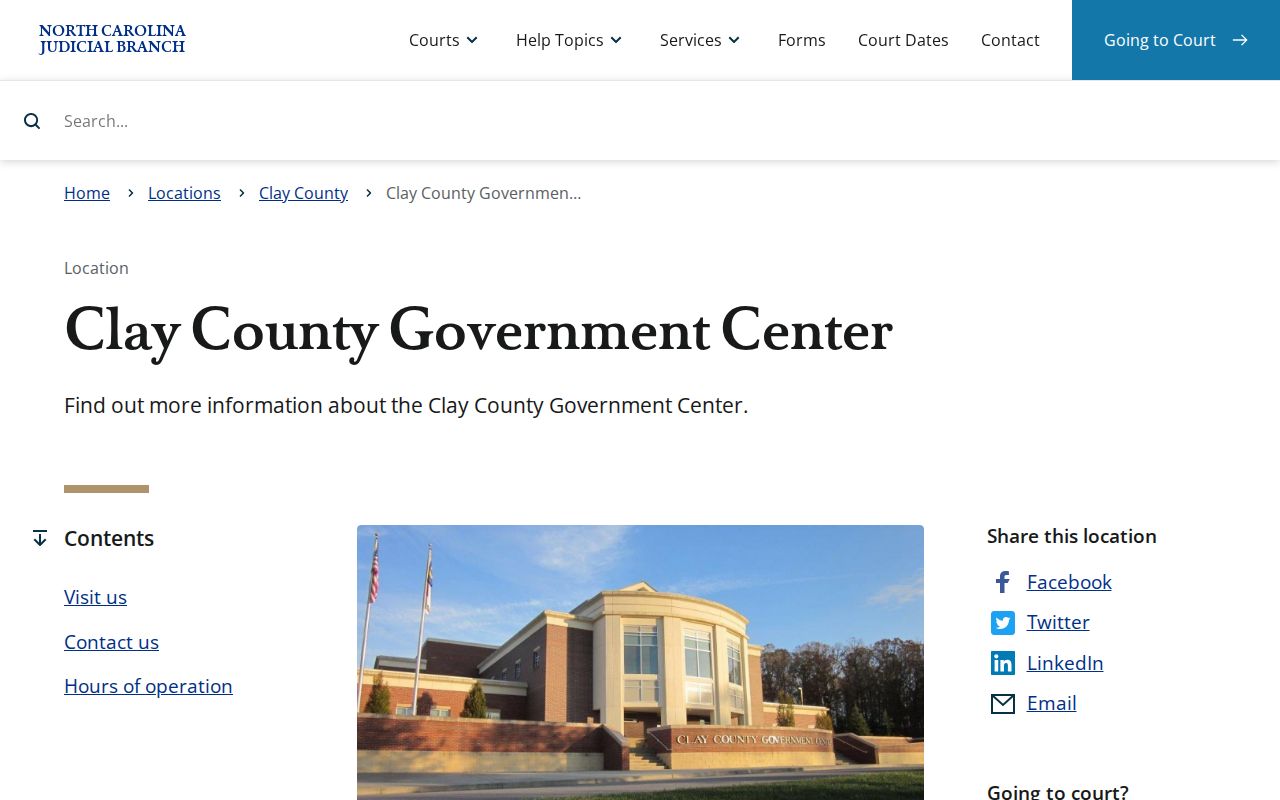
The Government Center is Clay County's in-person stop for terminal questions, paper-file inspection, and official copies.
Clay County Court Docket Terminal
When an online search does not settle a Clay question, the public self-service terminal is the key fallback. State court-record guidance allows criminal searches at a clerk office by defendant name, case number, or victim or witness name. It also identifies terminal access for civil, special-proceeding, and estate information. Ask the Clay Clerk how the terminal and paper-file inspection procedure works. Do not assume a kiosk location, a staff-assistance policy, or extra hours the local source does not publish.
The same fallback helps separate a public summary from the record you actually want. A document can be missing from view. The reasons range from confidential and sealed to restricted, never uploaded, or simply too large a file. Official Portal guidance says an oversized document may require a Clerk request for smaller available file segments. NCAOC's agency public-record request form is not a substitute for the county case-file custodian.
The Clay County court contact directory supports the local Clerk channel when a public Portal search needs follow-up.
The Clay contact directory backs up the local Clerk channel whenever a public Portal search needs follow-up.
Clay County Court Dockets by City
Hayesville is Clay County's only incorporated town per the 2020 Census, with a population of 461. It has Town Hall and municipal government functions. But it has no municipal court, no municipal court clerk, no city citation docket, no city court calendar, and no city payment portal. A Hayesville event or citation that becomes a state court matter is searched through the Clay District Court and the statewide Portal, not through any city-court database. The city page keeps that local boundary clear. It directs record questions to the correct courthouse and clerk.
Hayesville Docket Search
Population 461 in the 2020 Census. Town Hall is not the court-record counter; Clay Clerk and Portal hold the state-court access route.
The Clay County court landing page lists the local court services and Portal route.
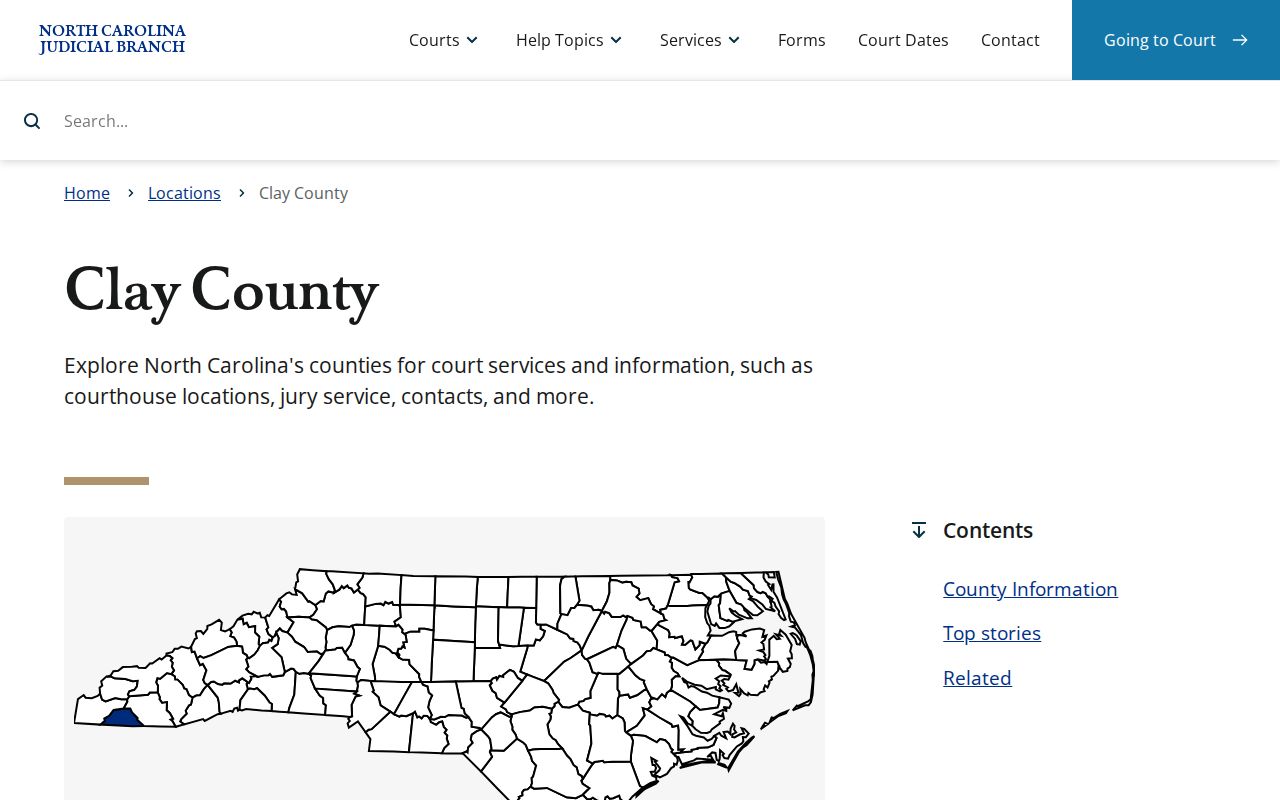
The county court-services page is the local reference point for Clay's trial courts, calendars, and records access.
The statewide statistical report collection provides context for court data rather than a replacement for live Clay case information.
Dated reports like these can help you read a Clay County docket search in wider context. For actual case details, though, the current Clay Case Summary is the source that matters.
Map and Directions to the Clay County Government Center
The Clay County Clerk of Superior Court keeps the county's Superior Court, District Court, estates, and small-claims records at the Clay County Government Center, 261 Courthouse Dr., Suite 1, in Hayesville. It is Clay's only courthouse, so a Hayesville-area matter and every other county filing use this same building and clerk's office. District 43 criminal local rules note that court begins at 9:30 a.m. and courtroom access opens by 8:45 a.m. for discussions.
Clay County Government Center
261 Courthouse Dr., Suite 1
Hayesville, NC 28904
(828) 389-2300
Monday-Friday, 8:00 a.m.-5:00 p.m.
Official sources do not publish a Clay-specific security-screening, parking, or transit policy, so calling the Clerk ahead of a time-sensitive visit is the safest plan. A jury information line, (828) 389-2305, lists separate jury hours of 9:30 a.m. to 5:00 p.m. that do not apply to ordinary clerk-records access.