
Searching Clay County Criminal Dockets
Start with the free North Carolina eCourts Portal. Choose Smart Search. Enter a record number or a name in Last, First form. Add Clay as the Location when the results need narrowing. Advanced filtering covers Criminal and Infraction case types. One caution: the Portal is view-only. It shows Enterprise Justice data but takes no filings. Filings belong in the separate File & Serve system.
The best search key is a number. Use the one printed on a summons, notice, citation, or other court paper. Name searches can pull many public cases, and results stop at 200. A full Clay County case number pinpoints one record. To confirm a current hearing, move from the Case Summary to Search Hearings. Then call the Clay County Clerk of Superior Court if anything looks changed or unclear.
- Open Portal Smart Search and enter a complete record number or Last, First name.
- Add Clay County as the location and select Criminal or Infraction when a broad result set needs refinement.
- Open the underlined case number to view its public Case Summary, also called the Register of Actions.
- Read the newest Case Event, any populated Hearings section, and the Dispositions section before treating an older entry as current.
- Call the clerk for a public-terminal check, paper-file inspection, or an official copy when the online view is incomplete.
Note: Registering lets you save cases in My Cases. It does not widen an ordinary user's public access.
Clay County Criminal Dockets in Smart Search
Portal searches are statewide, so filtering by the Clay location matters. The basic field takes a record number or a party name. Advanced controls narrow a Clay County criminal result by case type, case status, filing-date range, or date of birth range. The public display hides the month and day of birth. Training materials add a warning. The advanced Party Name filter is more limiting and does not support wildcard searching.
North Carolina criminal-case materials supply state-level context. They explain the steps that appear in a Clay criminal Case Summary.
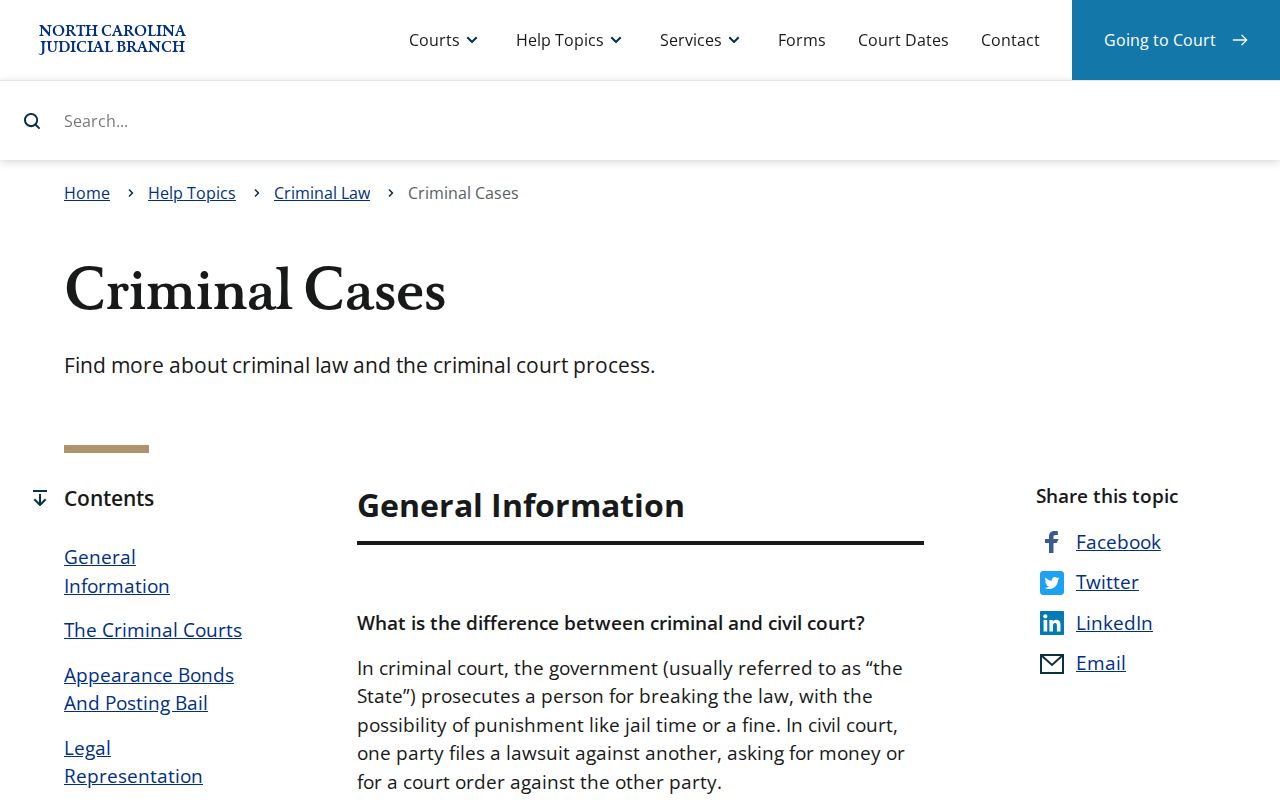
Criminal stages and docket entries are related things. A case's true sequence comes from its dated public events and present hearing record.
Inside a Clay County Criminal Docket
North Carolina labels the public timeline a Case Summary or Register of Actions. What appears depends on the data that exists. It can show case and assignment information, public parties, chronological Case Events, hearings, dispositions, and financial information. Victims never appear in public results. Expect event history without every document image or every field.
For the order of Clay County public activity, the register is the best starting point. Documents appear only when public. Sealed, confidential, or restricted items stay out, and downloads happen one at a time. The Clay County clerk remains the custodian of the official record.
| Record number | A year, case-type letters, sequence, and county identifier, such as YYCR######-210. |
|---|---|
| Case Events | The chronological public timeline, which can include filing, process, service, reset, hearing, and disposition events. |
| Hearings | A conditional section. Use Search Hearings for the current location and time. |
| Dispositions | Outcome details when entered. A status filter alone is not a complete legal finding. |
| Financial Information | A conditional section that appears only when information exists in the public record. |
Clay County Criminal Docket Code 210
An Enterprise Justice record number uses two filing-year digits, a letter case type, a six-digit sequence, a hyphen, and a three-digit county identifier. Clay's identifier is 210. The official examples list CR for criminal and IF for infraction matters. Copy the complete number from court paperwork rather than assembling one from an estimate. A full number is the safest search key.
The Clay County local-rules page gathers local criminal scheduling and procedure materials. Its accompanying image points to that local source rather than to a separate county-run criminal database.
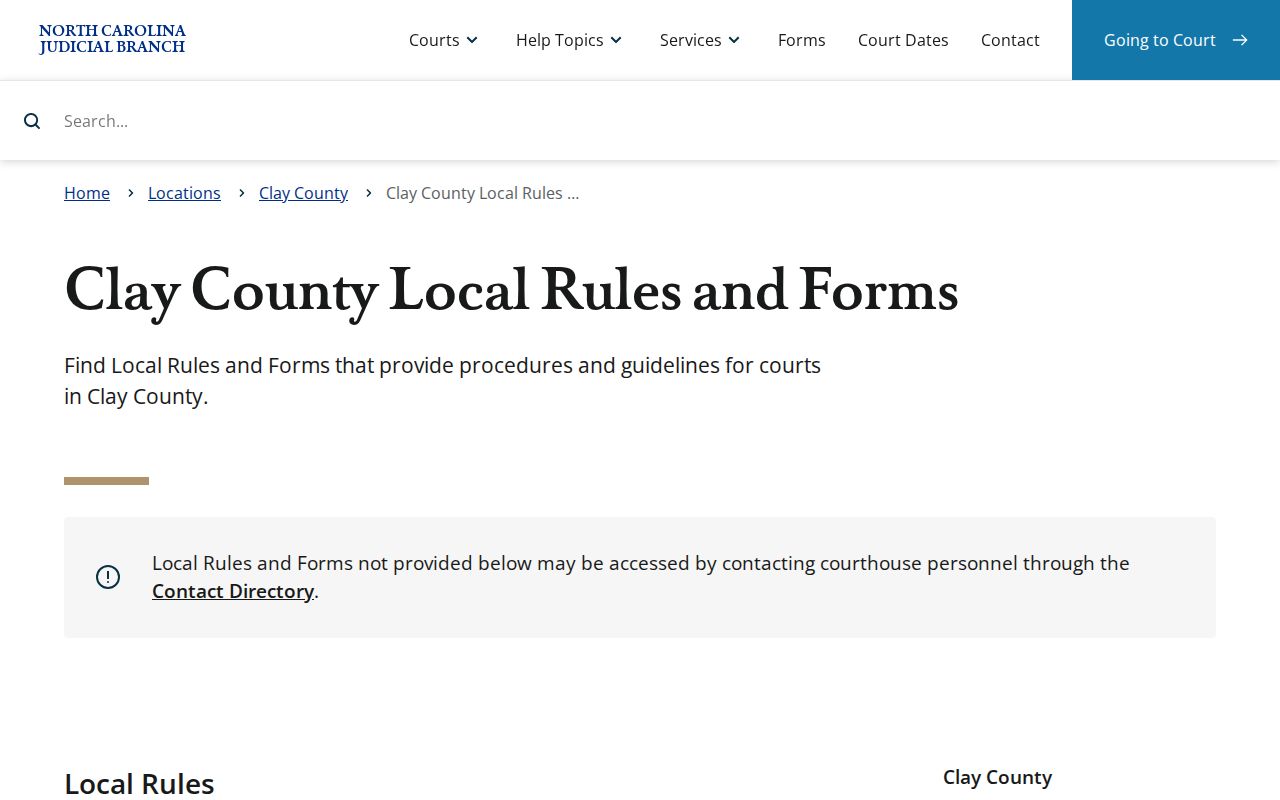
Local rules can explain docket practice. For verifying a specific criminal case, the Portal's current Case Summary remains the record-level place.
- CR
- Criminal case-type letters shown in the official numbering example.
- IF
- Infraction case-type letters shown in the official numbering example.
- Pending
- A Portal status label indicating that the case has not reached a final disposition in that category.
- Transferred to Superior Court
- A public status label that can show movement to the Superior Court level.
How a Criminal Case Moves
Public Case Events build the Clay County criminal timeline. Expect initial process, then possibly arraignment or other settings, pretrial activity, a plea or trial, a disposition, and sentencing information where entered. A warrant, order for arrest, or criminal summons adds its own entries when the matter is unrestricted: issue, service or unservice, reset to unserved, and recall.
Criminal docket flow: Filing › Arraignment › Pretrial › Plea or Trial › Disposition › Sentencing.
Read older rows with care. Clay joined the eCourts Track 5 conversion in July 2024, and pre-conversion events can carry a 12:00 a.m. timestamp. That artifact does not prove a real midnight hearing. For the current calendar, use Search Hearings.
Clay County Criminal Court Settings
No calendar or session schedule settles an individual Clay criminal setting. The official local materials describe current schedules, a continuance policy, and the 43rd Prosecutorial District Criminal Case Docketing Plan, and they state that District Court has no calendar call. Courtroom access opens by 8:45 a.m. for discussions and court begins at 9:30 a.m., but a specific case still needs a current Portal or clerk confirmation.
North Carolina judicial district maps show where the two Clay trial-court levels sit in the statewide structure, while Clay County administrative schedules supply the local session context.
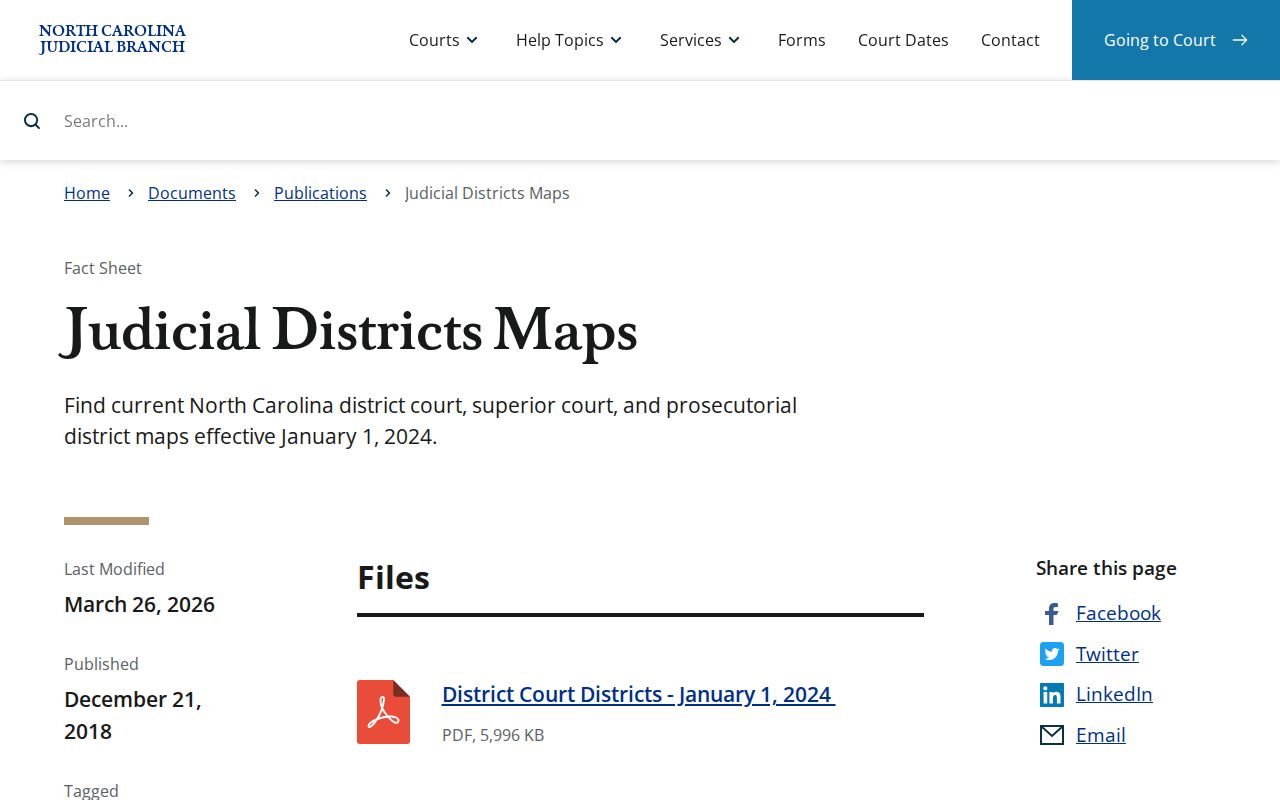
Treat the schedule as a planning aid. Case Summary, Search Hearings, and the clerk give the present setting.
Courts That Hold Criminal Dockets
One office holds the trial-court files here: the Clay County Clerk of Superior Court. It serves both Superior Court District 43A, where felony cases are heard, and District Court District 43. That District Court handles misdemeanors and infractions. Magistrates sit as District Court officers. They set release conditions, take certain minor pleas and waivers, and handle the first steps of a criminal case. No separate Clay docket office exists for them.
The official Clay County court page lists local services and links. One clerk and one Portal serve everything. Even so, a felony and a misdemeanor can follow different trial-court paths.
| Clay court level | Criminal matters | Docket route |
|---|---|---|
| Superior Court District 43A | Felony cases | Clay-filtered Portal Case Summary and Clay Clerk file. |
| District Court District 43 | Misdemeanors and infractions | Clay-filtered Portal Case Summary and Clay Clerk file. |
| Magistrates | Initial process, release matters, eligible minor pleas or waivers | District Court record chain, not a separate public portal. |
Clay County Criminal Docket Statuses
Portal filters carry labels like Pending, Archived, Appealed - Appellative, and Stayed. Others include Transfer to Another County and Transferred to Superior Court. Under the disposed heading you may see a dismissal on order of the court. You may also see final judgment without trial, trial by judge or jury, or voluntary dismissal. Read the labels as clues, not conclusions. A status helps narrow a docket search. Yet only the Case Summary and its event timeline tell the real story.
The North Carolina criminal-case information gives the state's official context for how these proceedings work.
Watch for transferred and appealed statuses. The original Clay County case can still matter. Later proceedings may move to a different court, and the file here remains part of the story.
Sealed Dockets and Public Access
Under G.S. 7A-109, clerks must keep dockets and indexes. The law generally opens them to inspection unless another statute blocks access. The Portal offers free public case information for Clay County. Still, it is not the official court record. Online material can fall short. When it does, the county public terminal, permitted paper-file inspection, and clerk-issued copies carry the weight.
Sealed and confidential records never show in the ordinary Portal view. Juvenile matters, unreturned criminal warrants, and protective-order material all carry extra limits. A blank result can stem from spelling, number format, or a restriction. It never proves the case does not exist.
North Carolina access rules.
G.S. 7A-109 addresses clerk records, dockets, and public inspection.
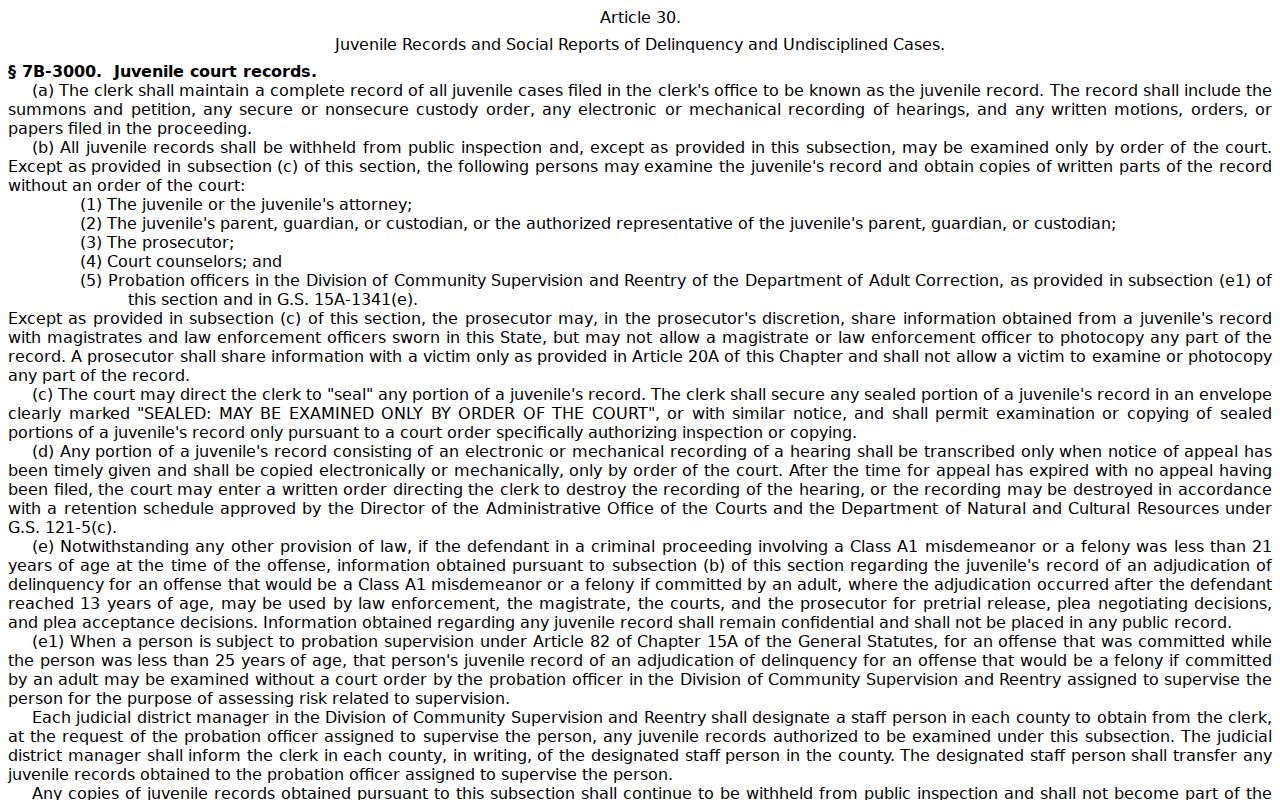
G.S. 7B-3000 limits public inspection of juvenile court records.
G.S. 15A-151 governs confidential agency files after expunction.
The official expunction statute materials are the source for the image below.
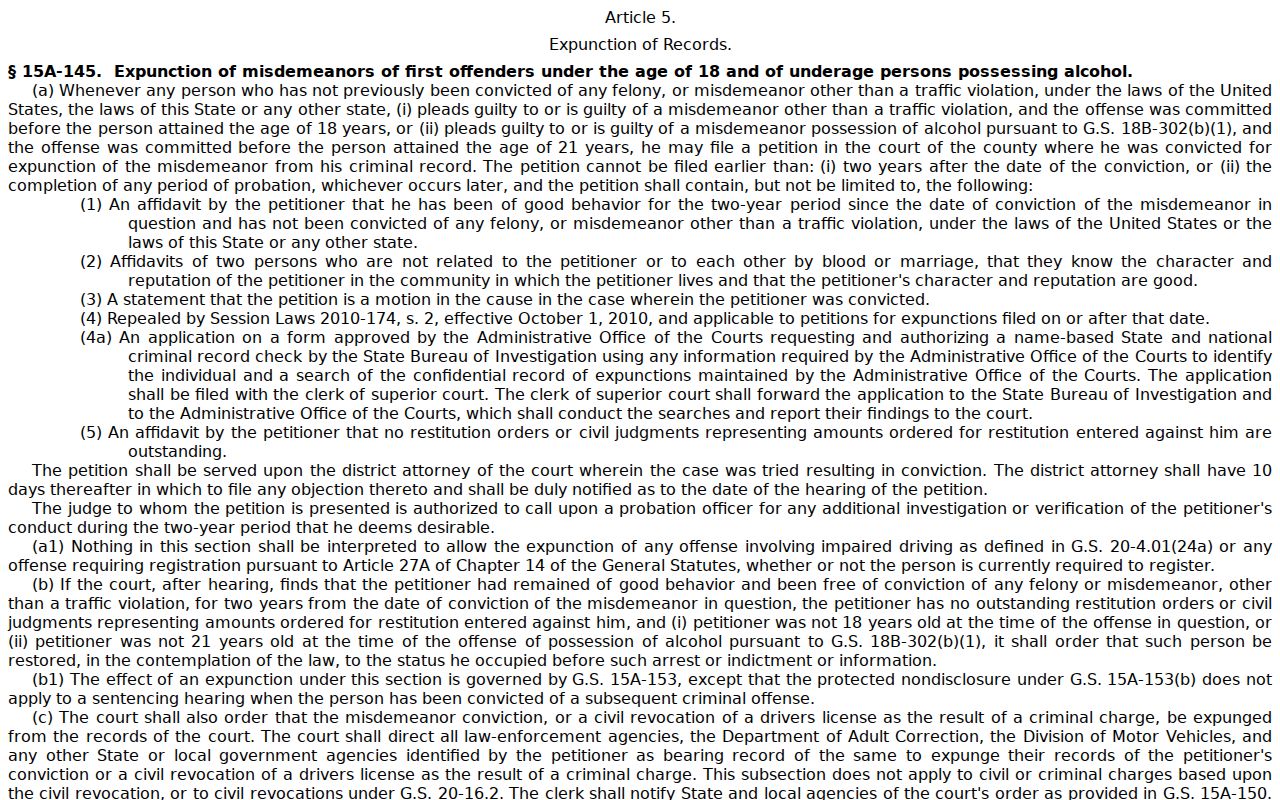
Expunged records stay out of public Portal viewing. Eligibility and procedure turn on current law and the specific matter, so ask the clerk before assuming anything.
Clay County Criminal Docket Restrictions
Missing or partial search results? Recheck the name first, then the full record-number format. If the docket still stays blank, call the Clay County Clerk of Superior Court at (828) 389-2300. Ask for direction on the specific case. The clerk's public terminal and permitted paper-file inspection serve as the local fallback channels. The statewide NCAOC public-record form covers existing AOC records only, not county case-file custody.
North Carolina's juvenile-record statute sets out who may see juvenile court records. It also sets the terms for that access.
Restricted categories follow their own access rules. A clerk inquiry beats treating an online absence as a final answer.